
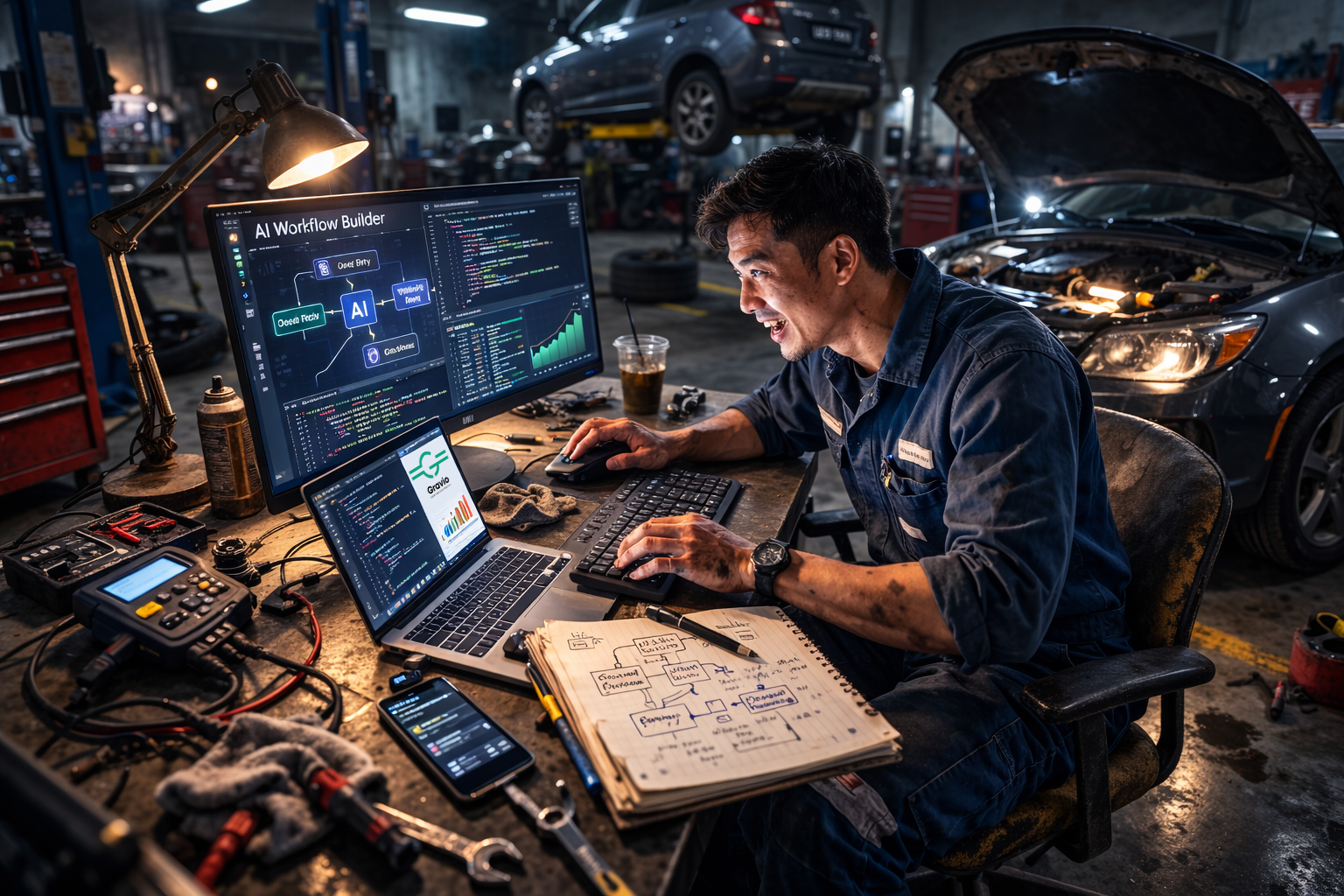
There was a time when building a small internal tool, spinning up a website, or wiring together an integration between two services required a software engineer. That time is ending.
AI-powered development tools have quietly crossed a threshold. Non-technical professionals - operations managers, HR leads, sales coordinators, finance analysts - can now build functional technical solutions themselves. We are not talking about no-code drag-and-drop widgets. We are talking about real tools, real websites, and real integrations into the services a company already uses, built by people who have never written a line of code.
At Asteria, we work closely with companies across Singapore navigating their digital transformation. Over the past few months, we have noticed a striking pattern: leadership teams know that AI can accelerate their operations, but they do not know where to start. The tooling landscape is vast, the terminology is intimidating, and the gap between "AI can do amazing things" and "here is how your team uses it on Monday morning" remains wide.
Many companies we spoke to were stuck in one of two places. Either they had heard the hype and were paralysed by the number of options, or they had already invested in AI tools but saw minimal adoption because the rollout lacked structure.
This is why we developed a practical framework to help companies give their non-technical people engineering-grade capabilities. The model is deliberately simple because complexity is what stalls adoption in the first place.
It starts with understanding the people, their roles, their comfort with technology, their ambitions and pairing that with concrete business challenges they face daily. From there, we identify the right AI tools and workflows, provide hands-on enablement, and guide teams through building their first real solutions. Not demos. Not sandboxes. Actual tools that solve actual problems in their work.
The result is a workforce that no longer waits for IT to build what they need. They build it themselves, faster and closer to the problem than any external team could.
This shift is bigger than any single organisation. Singapore has set an ambitious course to become an AI-native economy. Achieving that goal does not hinge solely on training more software engineers, it hinges on enabling the broader workforce to harness AI as a creative and productive tool.
When a marketing coordinator can build her own lead-tracking dashboard, when an operations manager can wire up an automated supplier notification system, when a finance analyst can create a custom reconciliation tool, the aggregate impact on national productivity is enormous. Every employee who gains these capabilities contributes directly to Singapore's economic output and competitiveness.
Digital transformation stops being a top-down IT initiative and becomes something organic, distributed, and self-sustaining.
If you are curious about unlocking engineering capabilities in your non-technical team, we would like to hear from you.
To help us assess whether we can help, share the following:
We will review your situation honestly and let you know whether our approach is a fit, or point you in the right direction if it is not.
Reach out to us at Asteria and let's explore what your team can build.


